On Tuesday, 12th May 2026, both 4th classes from Claddagh National School went on a tour to visit Galway’s Living Bog at Ceathrú na gCapall outside Mountbellew in north Co. Galway.
First thing in the morning, we took a bus journey from the school, which took about one hour.
When we arrived in Mountbellew, we stopped at the mart where the information centre about the bog is located. We watched a short video about bogs. We learned how bogs are formed, some of the plants and animals that live on bogs, and about how humans’ relationships with bogs have changed over the years, especially since we started using machinery to cut turf. We also learned that less than 1% of Ireland’s raised bogs remain today. One of the bogs that is being preserved is the one at Ceathrú na gCapall.
We had a drink and a snack and then it was time for the short bus journey to the bog.
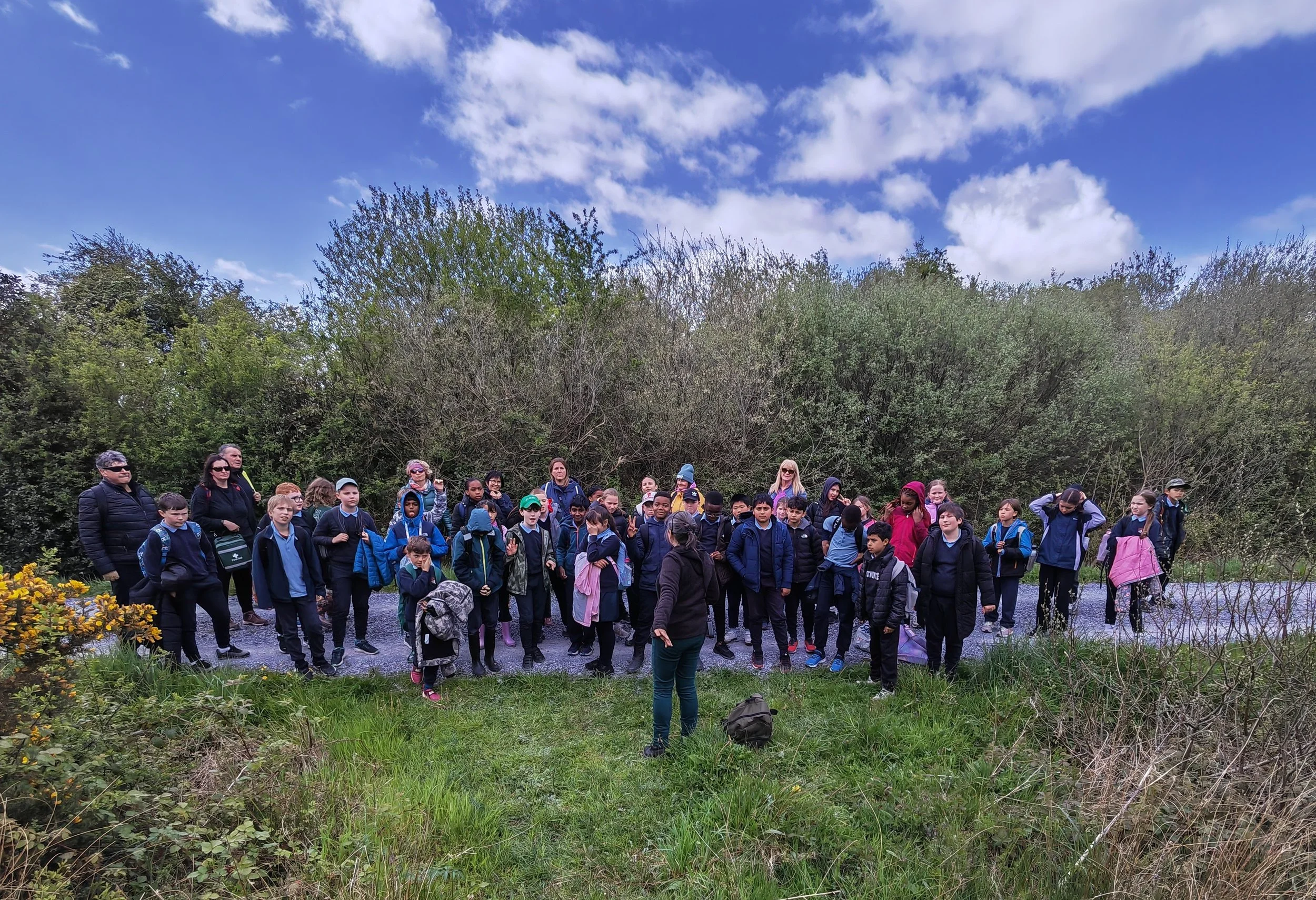
When we got there, we met our guide, Marie. We followed her down a small road into the bog, stopping along the way to learn interesting facts about the bog and its history. We learned that people used to use the bog as a rubbish dump, but nowadays it is being protected. We learned that local people had cut turf on the bog to use for cooking and heating for hundreds of years, but that they had all now agreed to stop so that the bog can be saved.
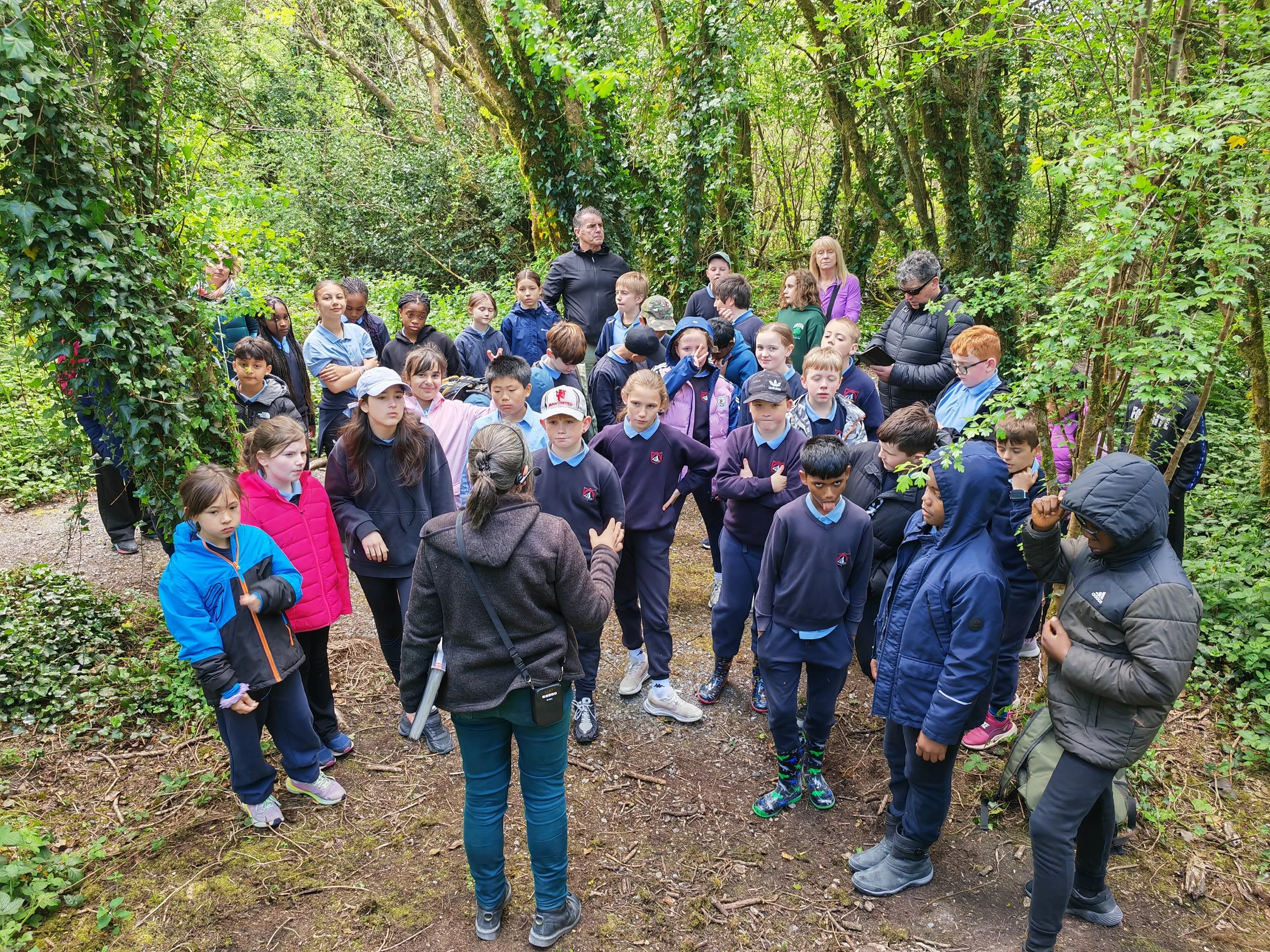
After walking for about 1.5 k.m., we reached the bog. We stopped to have some lunch and then we walked through a small forest and onto a boardwalk above the bog itself. We stopped on a platform and Marie told us the bog formed about 10,000 years ago, after the Ice Age.
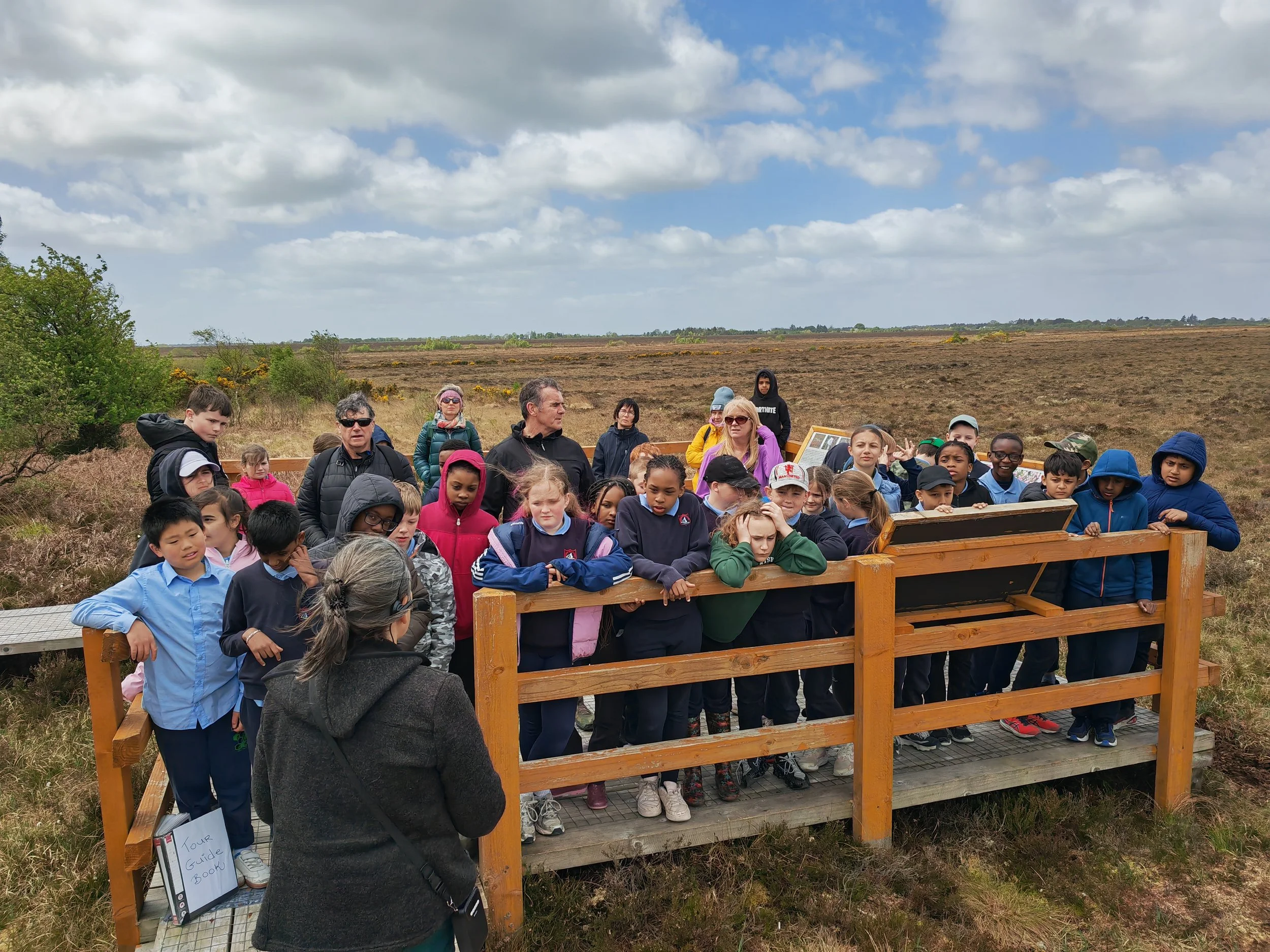
She taught us about some of the plants that live on the bog, including spaghnum moss, bog cotton and sundew.
We learned that spaghnum moss can hold 25 times its own weight in water, and that it has been used for medicinal purposes for generations. It was even used as an antiseptic dressing during World War I!
Sundew is an amazing plant – it is carnivorous! It uses a sticky, honey-like substance to trap insects and then it closes slowly on them and dissolves them. A sundew eats approximately five or six flies per month!
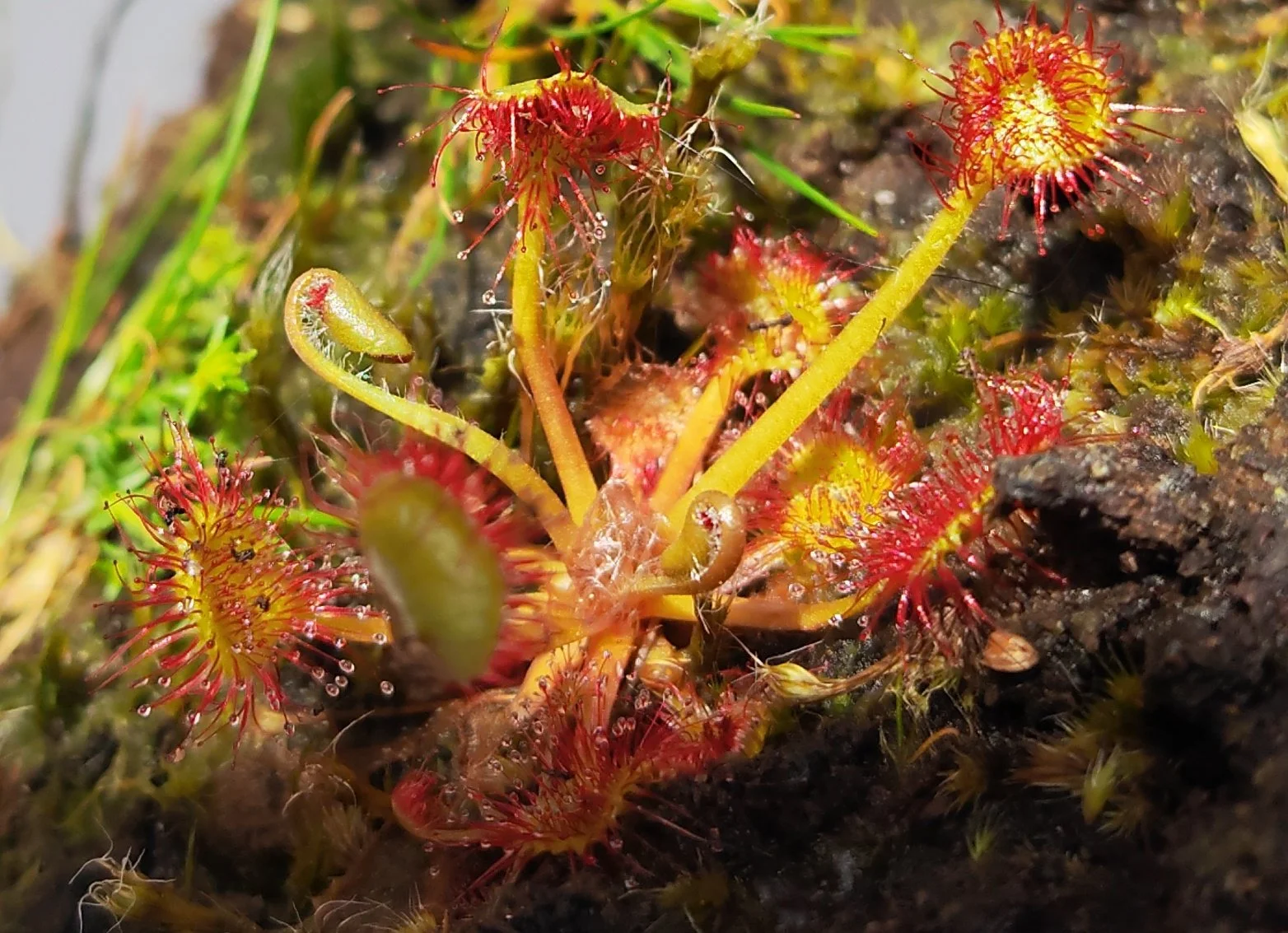
Finally, after Marie showed us some sundew plants and how spaghnum moss can filter water, we walked the short distance back to the bus. It was a really enjoyable stroll, and we got to see plants that were growing along the road, for example ferns and hawthorn trees.
We learned a lot of things about the bog and really enjoyed our trip. We hope we can go there again some day!